Enhancing Independence: Smaller Senior Care Residences and Daily Living Assistance
Business Name: BeeHive Homes of Arrowhead Assisted Living
Address: 17202 N 69th Ave, Glendale, AZ 85308
Phone: (602) 717-1864
BeeHive Homes of Arrowhead Assisted Living
BeeHive Homes of Arrowhead Assisted Living care is ideal for those who value their independence but require help with some of the activities of daily living. Residents enjoy 24-hour support, private bedrooms with baths, medication monitoring, home-cooked meals, housekeeping and laundry services, social activities and outings, and daily physical and mental exercise opportunities. We offer full memory care services that accommodate the growing number of seniors affected by memory loss and dementia. Beehive Homes offers respite (short-term) care for your loved one should the need arise. At the BeeHive Homes of Arrowhead Assisted Living, we strive to provide the best care for our residents while maintaining their dignity and respect.
17202 N 69th Ave, Glendale, AZ 85308
Business Hours
When households very first walk into a smaller senior care home, they typically look surprised. They anticipate something that seems like a small healthcare facility. Instead, they find a regular house, slippers by the door, the odor of soup on the range, and locals chatting at a dining table that seats 8 rather of eighty.
I have actually seen that moment modification people's thinking. Households show up looking for a location that can keep a loved one safe. They leave realizing they might have discovered a location where that loved one can still live, not simply be cared for.
Smaller homes can be an option to large assisted living neighborhoods, to traditional nursing homes, and often even to staying at home with cobbled-together assistance. Done well, they offer older adults a mix of independence, routine, and customized daily living assistance that is hard to replicate elsewhere.
This is not magic. It is a set of useful choices about size, staffing, and philosophy that plays out minute by minute: help with dressing that respects modesty and speed, a favorite tea made the right way, a walk outside when someone feels restless rather of another hour in front of the tv. Those details matter more than any sales brochure language about "person-centered care."
What smaller senior care homes truly are
Families utilize lots of expressions for these settings: residential care homes, board-and-care, care homes, small-group assisted living. The terminology varies by state and nation, but the core idea corresponds.
A smaller senior care home normally means:
- An accredited residence with a small number of residents, often varying from 4 to 16, living in a house-like environment.
That is the very first list.
These homes typically provide assisted living level services: help with individual care, medication management, meals, housekeeping, and coordination with outdoors health care. They belong to the broader senior care landscape, along with larger assisted living communities, nursing homes, and at home elderly care.
Where they vary is scale and atmosphere. Instead of long corridors and several dining rooms, you see a routine living-room with familiar furnishings, a kitchen area that smells like real cooking, and bedrooms that look like bedrooms, not hospital rooms. Personnel are often called by given names, and homeowners are too. Shift modifications are quieter, paperwork is less visible, and regimens bend more quickly around individual habits.
Not every smaller home provides the very same level of care. Some operate almost like independent living with light assistance, others manage sophisticated dementia, oxygen management, or complex medication schedules. That is why labels alone are inadequate. The genuine concern is what daily living assistance they can deliver, and how that support is woven into the rhythm of the day.
Independence and daily living: more than slogans
Families typically say, "We desire Mom to stay independent as long as possible." The difficulty is that self-reliance looks really different at 75 than at 92, and different once again when somebody is coping with Parkinson's or moderate dementia.
Professionally, we break everyday function into 2 groups.
Activities of daily living (ADLs) include bathing, dressing, grooming, consuming, toileting, and moving, such as moving from bed to chair. Crucial activities of daily living (IADLs) include jobs like cooking, managing medications, paying costs, housekeeping, and utilizing transportation.Independence does not indicate doing whatever alone. It implies having the ability to take part meaningfully in your own life, with the right level of support. A person who can no longer securely enter a tub may still pick their own clothes, comb their hair, and choose whether they prefer an early morning or night shower. That is independence, even if a caregiver is standing by.
Smaller senior care homes, at their finest, excel at this nuance. With fewer citizens and a more home-like structure, personnel can change support to the precise point where it is needed. Instead of "shower days" dictated by a center schedule, a resident might be asked, "Are you feeling up to a shower this morning, or would you prefer tonight after supper?" Instead of a repaired dining hall menu, staff might observe that someone has hardly touched breakfast for three days and ask, "Would toast and peanut butter sit much better than eggs today?"
Those small options support identity and autonomy. Over time, they shape how someone feels about themselves: an individual still making choices, not a things being managed.
How smaller homes boost independence
The advantages of smaller senior care homes are manual. They depend on management, staffing, and training. When those align, a number of advantages tend to emerge.
Familiar scale and predictable faces
Human beings orient themselves in area and relationship. Environments that are modest in size, with clear line of visions, are easier to navigate for older adults, especially those with moderate cognitive disability or visual difficulties. In smaller homes, the course from bedroom to restroom to cooking area is short and quickly familiar. Locals usually learn who lives where, who sits at which chair, and who normally assists with what.
Because there are fewer homeowners, personnel turnover is quickly seen. That can be a weakness if turnover is high, but when leadership invests in retention, the result is a core group of caregivers who actually understand each resident. Mrs. Thompson is calmer after her tea. Mr. Patel prefers his afternoon nap in the recliner, not the bed. These information accumulate into trust. When residents trust caregivers, they are more willing to attempt jobs themselves with a little bit of support, instead of avoiding them out of worry or confusion.
A various type of staffing pattern
In big assisted living structures, staffing is typically arranged by hallways or floorings. Caretakers might be responsible for 12 to 20 homeowners each. In smaller homes, the ratio is usually lower, and the functions are less segmented. The very same individual who helps someone gown may also serve them breakfast, notification that they are walking more gradually, and later mention it to the nurse.
That connection matters for independence. Rather of intervening just when jobs fail, staff can expect problems and adjust assistance. A caregiver may see that a resident is taking longer to button t-shirts however still wants to attempt. They can recommend loose, front-opening tops, established the t-shirt on a flat surface area, and after that step back. The resident completes the task with dignity, not frustration.
From a practical viewpoint, I typically see smaller homes "catch" practical decrease earlier. A caregiver who sees early morning regimens every day notifications when a resident starts leaning on the sink to stand up, or when it takes two times as long to tie shoes. Early recognition suggests physical treatment or movement aids can be presented before a fall, which maintains both safety and confidence.
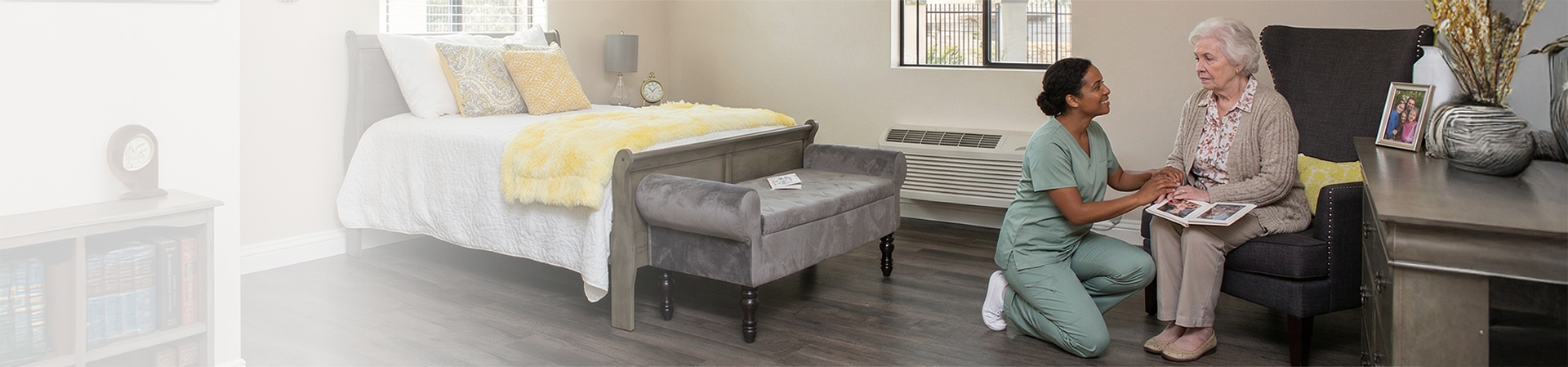
Flexibility in everyday routines
In conventional centers, schedules exist partly to manage intricacy: so many locals, many tasks. Meals, baths, group activities, and medication rounds cluster around set times. For some individuals, this structure works well. Others feel pushed into a rhythm that does not match their long-lasting habits.
Smaller senior care homes can often bend their routines more quickly. If a night owl chooses breakfast at 10:00 rather than 8:00, it is normally possible without interrupting an entire wing. If a resident likes to shower every other day rather of on "Monday, Wednesday, Friday," the team can adapt. That flexibility supports self-reliance by letting individuals live closer to their natural patterns.
One of my favorite examples includes a retired baker who had always woken up around 4:30 in the morning. When he moved into a small home, the personnel agreed that as long as it was safe, he could keep that routine. They pre-set the coffee machine and put his preferred mug on the counter. He did not bake at that hour anymore, however the peaceful time in the dim kitchen area with a warm mug in his hands seemed like connection with the life he had built.
Social life without overwhelm
Social contact is important in elderly care. Seclusion accelerates cognitive decline and depression. Large assisted living neighborhoods typically promote their activity calendars, and for some homeowners, that variety is precisely ideal. For others, especially those with hearing loss, stress and anxiety, or dementia, huge group events feel more like sound than connection.
Smaller homes offer a different design. Discussions normally unfold among a handful of people: 3 locals and a caregiver at the table, 2 individuals folding laundry together, someone chatting with a visitor in the garden. These settings make it simpler for quieter citizens to take part. Staff can customize activities in the moment: turning an easy job like snapping green beans into a shared activity, or welcoming somebody to assist set the table instead of putting them in a bingo video game they never ever liked.
It is independence of character, not simply function. Individuals can stay shy or social, talkative or reserved, and still be woven into daily life.
Comparing smaller homes, large assisted living, and staying at home
Families often feel they must select in between staying at home with assistance, relocating to a big assisted living facility, or transitioning to a smaller care home. Each option has strengths and compromises, and the best choice depends upon the person's needs, personality, financial resources, and assistance network.
Here is an easy method to consider it:
- Home with services: Maximizes control over environment and routines. Functions finest when the home is safe to browse, friend or family can fill spaces between expert visits, and the person can endure durations alone. Expense can be remarkably high when care requires technique 24 hours.
- Large assisted living: Offers features, activity variety, and a social "school." Best fit to more independent senior citizens who delight in groups, can adapt to structured schedules, and do not need heavy individually assistance. Typically an excellent match early in the aging journey.
- Smaller senior care homes: Supply close supervision and hands-on help in an unwinded, residential setting. Usually work best for those who need constant help with ADLs, take advantage of a quieter environment, or feel overwhelmed in big buildings. May be more budget-friendly than personal 24-hour home care, but less adjustable than living at home.
That is the 2nd and final list.
Respite care can suit any of these categories. Some smaller homes accept short-term stays, providing family caretakers a break. A week or 2 of respite can also act as a "trial run," letting everybody see how the environment impacts state of mind, movement, and engagement before making longer-term decisions.
Daily living support in practice
When examining senior care choices, families frequently hear general statements: "We aid with all activities of daily living," or "Thorough support with individual care." Those expressions do not catch what the care feels like from the resident's perspective.
In a smaller care home, a normal early morning might appear like this. A caregiver knocks, waits for a response, then enters and greets the resident by name. They ask how the night went and listen to the response. Together they decide whether today is a shower day or a fast wash-up. The caretaker lays out 2 attires that match the weather and asks which is preferred. If arthritis has actually stiffened the resident's hands, the caregiver may guide their arms into sleeves while permitting them to pull the shirt down themselves.
Medication assistance is woven in. Tablets are not tossed into small paper cups and lined up on carts in a corridor. Instead, a staff member brings the medication to the resident, explains what each is for if the resident wants to know, provides a preferred assisted living glendale az beverage, and waits enough time to make sure everything is really swallowed. For somebody with memory problems, that perseverance can prevent missed doses.
Mobility assistance often gains from the home-like scale. The range from bed room to bathroom might be just far enough to count as mild workout, with a caretaker walking together with. If someone is unsteady, staff can encourage the use of a walker without turning every transfer into a crisis. They are not watching twenty residents at once, so they can take those extra moments at the start of motion, which is when most falls can be prevented.
Meals in a smaller home tend to resemble family-style dining. Choices are typically more flexible than they appear on a composed menu, because the individual cooking is frequently the one serving. A resident who enjoyed spicy food throughout life should not suddenly have whatever bland "for simplicity." With a little bit of attention to dietary restrictions and chewing capability, favorites can usually be maintained in some form. That protects pleasure, which in turn supports cravings, weight, and strength.
Housekeeping and laundry become chances, not just tasks. Numerous locals wish to help fold towels, match socks, or dust their own bedside table. In a big facility, such involvement can be challenging to supervise securely. In a small home, a caretaker can stand close by, chat, and gently adjust the work based upon fatigue.
Coordination with outdoors healthcare is also part of everyday living support. Transportation to physician visits, sharing updates with households, and tracking changes in habits or hunger all impact self-reliance. I have seen smaller homes where caregivers frequently join telehealth visits with the resident, including useful details that the resident might forget. "She is walking a bit slower this month, and we noticed more difficulty when she gets up from a low chair." That information can trigger timely physical treatment or medication changes, preventing crises that might require an unwanted move.
Respite care, when used in these homes, follows similar routines however over a much shorter period. It permits both the resident and the family to experience how these assistances affect daily life. Often, households are amazed to see improvement in function. With constant, unrushed aid, someone who was "too exhausted" to shower safely in the house may manage it regularly once again, just because they feel less hurried and less anxious.
When a smaller home is not the right fit
No single senior care choice fits everybody. Smaller homes, for all their benefits, are not ideal in every situation.
Residents who need intensive treatment beyond the scope of assisted living, such as ventilator assistance, complex wound care, or frequent IV treatments, are generally much better served in a skilled nursing center or hospital-based program. Some smaller homes partner with home health firms, however there are limitations to what can safely be managed in a residential setting.
Behavioral challenges can likewise be challenging. An individual with serious aggression, wandering that withstands all intervention, or substantial exit-seeking habits may require an extremely safe and secure environment with specialized staffing. While some smaller homes are designed particularly for innovative dementia, others are not physically established for consistent redirection and risk management.
Cost is another factor. Per-day rates for smaller homes are frequently competitive with bigger assisted living facilities, sometimes lower. Nevertheless, the all-inclusive nature of the rates, while practical, can limit flexibility. In some areas, Medicaid or public funding is less offered for small residential options than for larger institutions, narrowing access.
Personal preference matters also. Some older grownups enjoy energy, variety, and structured shows. For them, a huge assisted living community with frequent events, an on-site gym, or a hectic lobby might feel more engaging. A peaceful cottage with 8 citizens, nevertheless well run, may feel too small.
The secret is to match the setting not simply to functional requirements, but likewise to personality and worths. An introverted individual who has always preferred a tight circle of relationships might thrive in a smaller care home. A long-lasting extrovert who organized area events might prefer a larger environment, even if it means compromising some versatility around routine.
How to evaluate a smaller senior care home
When households tour smaller homes, the experience can be deceptively pleasant. The scale feels comfy, the staff seem friendly, and it smells like supper. To move past first impressions, concentrate on what daily life will look like.
During visits, pay attention to who remains in typical locations and what they are doing. Are locals participated in small conversations, enjoying television with interest, or sleeping in wheelchairs? Do personnel address residents by name and at eye level, or from a distance while multitasking? Observe how somebody who is puzzled or distressed is dealt with. Calm redirection and gentle explanation suggest training and patience.
Ask specific questions. How many residents are here, and how many staff are on responsibility throughout days, nights, and nights? Who prepares meals, and how versatile are they with preferences and cultural foods? Can residents select their own waking and sleeping times? How are changes in health interacted to families? If the home offers respite care, ask how short stays are integrated into the daily routine.
It is likewise worth asking caretakers themselves the length of time they have actually worked there and what they like about the task. Individuals who feel reputable and heard are most likely to stay, minimizing turnover. Continuity is among the greatest signs that a home can support self-reliance gradually, not simply offer basic elderly care.
Regulatory history matters too. Look up inspection reports where possible and ask how any noted shortages were fixed. No setting is perfect, but a pattern of the same problems repeating throughout years is a warning sign.
Keeping identity at the center
The best smaller senior care homes deal with self-reliance as more than physical ability. They safeguard identity: who someone has been, what they value, what they still want to contribute.
For one resident, that may mean listening to symphonic music each early morning while checking out the newspaper, even if a caregiver now needs to hold the paper in place. For another, it may mean continuing to practice a faith tradition, with personnel reminding them of service times or arranging transportation. For someone else, it might be as basic as protecting an enduring practice of calling a brother or sister every Sunday evening.
Families play a crucial function in this. The more detail staff have about life history, preferences, worries, and routines, the much better they can customize daily living assistance. I typically motivate families to compose a short "about me" file: favorite foods, previous jobs, crucial relationships, hobbies, and routines. In a small home, personnel are actually likely to read and use it.
When senior care is arranged in this manner, self-reliance does not disappear as needs grow. It shifts, from doing tasks alone to directing how those jobs are done. A resident may no longer cook the meal, but they can pick what is on the plate. They may not handle their own medications, however they can decide to discuss negative effects with their doctor. That sense of agency is what sustains dignity.
Bringing it back to what matters
At its heart, the option of a smaller senior care home has to do with how somebody will live each day, not just where they will sleep. It is about whether an individual will feel understood when they get up confused, whether a caregiver will keep in mind that they like sugar in their tea, whether there is time in the schedule for a sluggish walk on a good-weather afternoon.
Smaller homes can not solve every problem in aging, and they are not widely the very best choice. Yet when they are thoughtfully run, with steady personnel and real attention to day-to-day living assistance, they offer something lots of households long for: a setting that can keep a loved one safe without eliminating the patterns and choices that make that individual who they are.
For older grownups who require assisted living or respite care, and for households balancing safety, independence, and emotion, these homes can bridge the space between "in the house" and "in a facility." They prove that senior care does not have to feel institutional. It can seem like life continuing, with aid, in a smaller and more manageable frame.
BeeHive Homes of Arrowhead Assisted Living provides assisted living care
BeeHive Homes of Arrowhead Assisted Living provides memory care services
BeeHive Homes of Arrowhead Assisted Living provides respite care services
BeeHive Homes of Arrowhead Assisted Living supports assistance with bathing and grooming
BeeHive Homes of Arrowhead Assisted Living offers private bedrooms with private bathrooms
BeeHive Homes of Arrowhead Assisted Living provides medication monitoring and documentation
BeeHive Homes of Arrowhead Assisted Living serves dietitian-approved meals
BeeHive Homes of Arrowhead Assisted Living provides housekeeping services
BeeHive Homes of Arrowhead Assisted Living provides laundry services
BeeHive Homes of Arrowhead Assisted Living offers community dining and social engagement activities
BeeHive Homes of Arrowhead Assisted Living features life enrichment activities
BeeHive Homes of Arrowhead Assisted Living supports personal care assistance during meals and daily routines
BeeHive Homes of Arrowhead Assisted Living promotes frequent physical and mental exercise opportunities
BeeHive Homes of Arrowhead Assisted Living provides a home-like residential environment
BeeHive Homes of Arrowhead Assisted Living creates customized care plans as residents’ needs change
BeeHive Homes of Arrowhead Assisted Living assesses individual resident care needs
BeeHive Homes of Arrowhead Assisted Living accepts private pay and long-term care insurance
BeeHive Homes of Arrowhead Assisted Living assists qualified veterans with Aid and Attendance benefits
BeeHive Homes of Arrowhead Assisted Living encourages meaningful resident-to-staff relationships
BeeHive Homes of Arrowhead Assisted Living delivers compassionate, attentive senior care focused on dignity and comfort
BeeHive Homes of Arrowhead Assisted Living has a phone number of (602) 717-1864
BeeHive Homes of Arrowhead Assisted Living has an address of 17202 N 69th Ave, Glendale, AZ 85308
BeeHive Homes of Arrowhead Assisted Living has a website https://beehivehomes.com/locations/arrowhead
BeeHive Homes of Arrowhead Assisted Living has Google Maps listing https://maps.app.goo.gl/D7JvVkn2P8RDaFQS7
BeeHive Homes of Arrowhead Assisted Living has Facebook page https://www.facebook.com/BeeHiveArrowhead
BeeHive Homes of Arrowhead Assisted Living won Top Assisted Living Homes 2025
BeeHive Homes of Arrowhead Assisted Living earned Best Customer Service Award 2024
BeeHive Homes of Arrowhead Assisted Living placed 1st for New Mexico Senior Living Communities 2025
People Also Ask about BeeHive Homes of Arrowhead Assisted Living
What is BeeHive Homes of Arrowhead Assisted Living Living monthly room rate?
Our monthly rate is based on an individual care assessment that determines the level of support your loved one needs. We use an all-inclusive pricing model, which means no hidden costs, no surprise fees, and no confusing tier add-ons. Contact us to schedule a complimentary assessment and personalized quote
Can residents stay in BeeHive Homes of Arrowhead Assisted Living until the end of their life?
In most cases, yes. We are committed to caring for our residents through their journey. Exceptions may arise if a resident requires 24-hour skilled nursing services or presents safety concerns that exceed what our home can accommodate. We work closely with families and healthcare providers to ensure smooth, compassionate transitions whenever they are needed
Do we have a nurse on staff?
Our home has a consulting nurse available 24/7. If nursing services are needed, a physician can order home health care to be provided directly in the home. Our trained caregiving staff is on-site around the clock for daily support, medication management, and emergency response
What are BeeHive Homes of Arrowhead Assisted Living's visiting hours?
We welcome family visits and work to accommodate schedules flexibly. We simply ask that visits happen at reasonable hours so our residents can maintain healthy daily routines. We believe family connection is essential, and we never want policies to get in the way of that
Do we have couple’s rooms available?
Yes. We have rooms designed for couples who want to stay together. Availability varies, so we encourage you to ask early during the tour and assessment process
Where is BeeHive Homes of Arrowhead Assisted Living located?
BeeHive Homes of Arrowhead Assisted Living is conveniently located at 17202 N 69th Ave, Glendale, AZ 85308. You can easily find directions on Google Maps or call at (602) 717-1864 Monday through Sunday 7:00am to 7:00pm
How can I contact BeeHive Homes of Arrowhead Assisted Living?
You can contact BeeHive Homes of Arrowhead Assisted Living by phone at: (602) 717-1864, visit their website at https://beehivehomes.com/locations/arrowhead or connect on social media via Facebook
Residents may take a trip to the Arrowhead Grill. Arrowhead Grill provides an upscale yet comfortable dining atmosphere where residents in assisted living, memory care, senior care, elderly care, and respite care can enjoy family meals.